

Remember when a typo could get you fired? Now it might be the thing that saves your job.
That’s not a joke (or at least not entirely). A recent State of Brand article laid out the strange new logic now taking over marketing departments and newsrooms. Perfect, polished copy used to signal care. Now, it supposedly signals a machine. So, human writers have started sprinkling in small mistakes on purpose, hoping a stray comma splice will read as proof that a real person sat down and typed the thing.
It’s a clever workaround. It’s also – if you ask some of the writers and communication professionals living through this moment – the most ridiculous way to prove their humanity. Job applicants are salting cover letters with typos. Executives are hitting send on emails they haven’t fully polished, hoping the rough edge reads as sincerity instead of sloppiness. That guy on LinkedIn who used to point out “it’s you’re, not your,” is now gleefully using the wrong one himself. None of this was a skill anyone set out to build. Yet, here we are, being graded on how convincingly we can seem imperfect.
We asked three writers and communication professionals what they thought about deliberate typos and the broader circus of hoops writers now must jump through to convince readers, editors and algorithms that a person – not a prompt – produced their work. Their answers ranged from mild skepticism to something closer to alarm.
The typo isn’t the tell they think it is
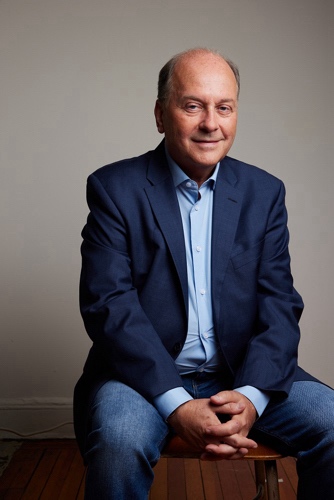
Drew Kerr is the founder of The Four Corners Group. He’s an executive communication coach who works with tech and Web3 leaders. He isn’t buying the idea that a planted mistake makes anyone look more human. If anything, he sees it as the opposite of good practice.
“I personally have trouble with errors when they are not on purpose,” Kerr said. “Even though typos are somewhat more tolerated than they used to be, they still send a message of carelessness and not paying attention to details.”
His clients don’t all agree with him. Some are more forgiving of a rough edge here and there. But Kerr draws a hard line between an honest slip and a manufactured one. He thinks faking imperfection sets a troubling example.
He pointed to a conversation between Rick Rubin and Angus Fletcher, a researcher who spent years helping US Special Forces sharpen their storytelling instincts after commanders worried that today’s soldiers had grown less intuitive and less creative than earlier generations. For Kerr, that story is a warning about what happens when a skill goes soft from disuse. Planting typos on purpose, in his view, feeds the same kind of decline.
It’s a fair point, and one that cuts against the tidy narrative that a few sloppy sentences will fix what AI has broken. If the goal is to prove a real writer is behind the words, deliberately writing worse doesn’t exactly demonstrate skill. It demonstrates the opposite, dressed up as a trust signal, Kerr said.

The jargon problem is arguably worse
Neil Robertson, founder of FourNine Marketing, has a different complaint entirely. It says something about how low the bar has sunk in an industry now flooded with machine-smooth prose. He’s less worried about typos than he is about the flood of empty phrasing that AI has made painfully easy to produce.
“The idea that one could be at a distinct advantage simply by externalizing the thoughts that enter their head, however banal or incoherent, shows how far writing standards have fallen in the age of AI,” Robertson said. “Once upon a time, writing something semi-believable in a way that could easily be comprehended by the bloke down the pub was a bare minimum requirement to work in this industry. Now, it’s a scarce commodity.”
Robertson’s frustration lands squarely on a specific breed of LinkedIn content, namely the “Not X. Not Y. Just Z” post, the founder who leans on words like “delve” or “hype” as if they were load-bearing walls in an argument. He’s not shy about how he’d like to handle it either, describing a fantasy where every offender gets rounded up and forced to eat 10 tins of Surströmming (the notoriously pungent Swedish fermented herring) until they can produce a 500-word article without reminding readers – again – how much the topic matters.
There’s a real argument buried in his quirky suggestion. If the industry is busy hunting for typos as proof of humanity, it might be looking in the wrong place. The tell isn’t the spelling. It’s the vocabulary, the rhythm, the reflexive hedging that AI tools and AI-adjacent writers alike have turned into a house style of its own.

When the stakes are higher than a LinkedIn post
For Johan Cedmar-Brandstedt, who works in business and content development at HiQ, the conversation stops being about individual writers proving themselves and starts being about what happens when an entire media organization opts for machine-made content. He doesn’t mince words on this one.
“An AI tell is a betrayal,” Cedmar-Brandstedt said, one that signals bad manners.
Though, he’s quick to note that bad manners must be weighed against the possibility that someone is dealing with something harder than it looks, and reached for a shortcut out of necessity rather than laziness. But in a media setting, he views it as a step beyond personal disrespect. A publication whose entire value proposition rests on truth and authenticity, he argues, does real damage to its credibility (and to the industry’s) the moment it opts for AI-generated slop.
He traced the roots of this back further than most people would, citing media analyst Tomas Baekdal’s long-running argument that chasing clicks to sell ads is a self-defeating cycle for publishers, while locally relevant, genuinely reported journalism builds the kind of loyalty that sustains an outlet over time. Generative AI, in Cedmar-Brandstedt’s telling, only speeds up the click-chasing side of that equation at the expense of the information ecosystem that props up functioning democracies.
Cedmar-Brandstedt also pushed back on the cottage industry that’s sprung up around ethical AI adoption, describing courses and blog posts peddling prompt workarounds for AI tells as being one rung removed from the very problem they claim to solve.
Still, he’s not advocating for some rigid, typo-laced standard as the fix. He’s spent enough time helping shape brand voices to know that a defined idiosyncrasy – even the occasional grammatical hiccup – has a place as part of a well-rounded authorial voice. What worries him is treating that quirk as the whole point.
“Consistent idiosyncrasy, even tics and grammatical errors, can absolutely be part of a distinct and well-rounded authorial voice,” he said. “But not as a defining trait.”
He also raised a wrinkle that undercuts the entire typo-as-proof strategy before it even gets going. Any signal that gets popularized as the go-to marker of authenticity, he argued, will get copied. Today’s AI models default to grammatically average output because they’re trained on models of good text. However, nothing stops anyone from training a model on bad text instead, whether built from scratch or adapted from what already exists. The moment a stray comma splice becomes the industry’s trust signal of choice, it stops being scarce, and it stops proving anything at all, he said.
So, what’s a human writer to do?
Taken together, these three perspectives paint a picture of an industry chasing its tail. Writers are told to make mistakes on purpose to prove they’re not machines. The people who spend their careers thinking hard about language and trust warn that the fix doesn’t hold up because it undercuts craft, misses the real problem, and gets swallowed by the same technology it was supposed to outsmart.
Maybe the more honest answer is the less exciting one. A typo was never really the point. It was a stand-in for something harder to fake – a person who sat with an idea, made a choice about how to say it, and then put their name on it. That’s a much higher bar than a well-placed comma splice. It can’t be manufactured by an algorithm looking to game the newest tell. It must be written, the old-fashioned way, by someone who means it.
None of that makes the current moment any less strange for the people living through it. Writers built careers on the promise that clean, correct, well-structured prose was the goal. Now, some of them are being asked to unlearn that instinct just long enough to convince a reader – or an editor or a hiring manager – that a real hand was on the keyboard.
Kerr, Robertson, and Cedmar-Brandstedt don’t agree on much beyond that discomfort. But each of them, in his own way, is pointing at the same uncomfortable truth. Proving you’re human shouldn’t require writing worse. It should simply require writing like you mean it, then and trusting readers can still tell the difference.